Sunday, February 18, 2018

Welcome to our Classroom

After a year of homeschooling in our dining room, my husband suggested that we needed to have a dedicated space. I wasn’t excited about the suggestion. I really loved the idea of school being an integral part of our home life. Our dining room was the perfect place to ingest and digest physical, spiritual, and mental food! It is in the center of our home, and was the perfect place for us to do school. It seemed like casting it off to a separate room would make it more institutional rather than fluid in our lifestyle. However, the lugging books upstairs every weekend, the clutter in my dining room... and the baby growing up and needing space to play all made having a classroom more convenient.


We converted our attic bedroom into a classroom. And, one and a half years later, I now need a bigger classroom! LOL! The more space you have, the more stuff you collect...

Our classroom reminds me of the old fashioned one room school house. The concept of the one room school house makes me happy inside. It has two desks for my older children, a toddler table for the babies, and a preschool corner. The front of the classroom has the cursive script letters banner going across (along with Hebrew letters) and the back of the classroom has print letters.
Preschool Early Learning Corner


We also have a 6 foot long table and two benches for crafts, projects, one on one learning, legos, etc.
Teacher's Corner (Ary pushes her preschool table close to me)
A highlight of our classroom is our pencil station. I get so irritated when my students say they don’t have a pencil, or they lost their pencil mid school day, or they broke their pencil... WHATEVER the pencil excuse is, I have a hopefully neverending stash of sharpened pencils fo my children. The pencil sharpener is also at the pencil station, along with extra erasers. This takes so much stress off of me. I keep other office supplies at our pencil station - there is post it notes, note cards, glue, tape, rulers, and a stapler. When any of these things are needed, they are quickly at our disposal. The only problem is that my 2 year old thinks these things are out so that she can get to them!

Educational Video Time
Even though we have a classroom, we still school in other areas of our house. I find that it is very useful to have a set apart space to keep down on school clutter in other areas of my house. It is also a good transition to my children’s morning routine... they eat breakfast and then “go to school”. It works for us so far! The only drawback is that I now have another room in my house to clean!
Pencil Sharpener Station

If you have an extra room in your home, or space that can be converted into a classroom, and if you think it will work out for your family - give it a try!

Classroom Checklist:
1. Long Table for Crafts and Activities
2. Desks
3. Toddler Table
4. Whiteboard or Chalk Board
5. Bookcases
6. Bins for each child’s books
7. TV for documentaries and educational videos
8. Toddler Corner: Floor Mat, Easily accessible Toddler Books and Puzzles, Felt Boand
9. Pencil Sharpener Corner: Pencil Sharpener, Plenty of pencils and erasers, Glue, Scissors, commonly used supplies
10. Printer (Especially if your classroom is far from your home office.
11. Student Artwork
12. A Calendar to mark upcoming events
13. Organizing Cabinets for supplies
14. A cork bulletin board
15. Oil Diffuser

-T.E.A. 2018


Friday, February 16, 2018

Losing Track of Grade Levels... The beginning of Educational Freedom

When we withdrew our children from school, we knew exactly what "grades" they were in. Because I was extremely new to the homeschool scene and wanted to do it "right", I bought a boxed curriculum for each child. My daughter's first grade box and my son's second grade box came in the mail, and I was set to go!

I soon made changes to the boxed curriculum... The reading curriculum wasn't working for my daughter, my son zoomed at record speed through his math book... We started branching out for history using our local library. My children were developing their interests, and wanted to spend more time focusing on things they wanted to learn about. We began to become more eclectic in our geography lessons - my children wanted to learn about different places and cultures. Our journey to LEARNING had begun! And freedom came with it!!

Now, if you ask my son what grade he is in, he will say something like, "I'm supposed to be in fourth grade." I first heard him say this to an adult a few weeks ago. The adult was perplexed... and, of course, the question soon followed: "What do you mean by saying you're supposed to be in fourth grade." He explained that some subjects he works on at the fourth grade level, but that he also does some things at different grade levels. He's losing track of identifying with one grade in particular, and instead he's focusing on what he is actually learning.

For example, we went to a college level electronics class at our local library last week. It was interesting that my "third and fourth graders" easily fit in with an adult class. I worked on the breadboard with my daughter, but she was answering questions in the class, and called the teacher over when she lost confidence in my skills. My son, on the other hand, worked on his own breadboard, and was very confident about his own ability to work by himself! They learned how to wire a flashlight using Ohm's Law in "elementary school"!

Categorization works extremely well when you need to organize a group of individuals and assess them. It is excellent for schools and universities. However, it can hinder independent learners. It is important to remember that the inventors, mathematicians, scientists, philosophers, writers, artists, musicians, etc over time who have made important contributions have thought outside all boxes and categorization!

It wasn't a goal to lose track of grade levels in our homeschool journey. However, now that we have, I am very excited. It's another tether that we have broken. And my children can now focus on learning on their own levels rather than being constrained to learning from a box (literally, a box). The box has an undeniable security to it... However, when we break free from the box, and don't measure ourselves based on the box, it is then that I believe we have begun the journey of educational freedom and deliverance. And, I'm excited to see what will come from it!

T.E.A. 2018  


Help! Should I care about what my children WOULD learn in Public School?

I am asked all the time for advice on what children “should learn and when”. I am also asked if children should learn the same things that they would learn in school and if they should follow common core standards in education. Hopefully this article will help those asking these questions.


What Children “Should” Learn and When?

The response will vary per family and even per student.

If you are a traditional homeschooler, with grade levels, then your child will learn standard things at standard times. For example, a third grader will follow a “third grade” curriculum for math that would include multiplication and division facts. If you are an unschooled, your child will learn things that line up with their interests. For example, your “third grade” child might learn a lot about astronomy if that’s their interest, and focus very little on third grade level math and grammar.

It’s important to recognize that as a homeschool family, you have freedom to navigate what your children learn in ways that are not traditional. For example, my children learn eclectic history that is often at a college level. We gather loads of library books and watch plenty of documentaries and videos. Their geography is likewise eclectic and involves them drawing the world and different regions on the map, as opposed to only learning latitude and longitude. I also make sure that for math they learn the subject matter before moving on from the subject material. So, my fourth grader is still working on multiplication facts from “second grade”, however he is also doing some fourth grade math material at the same time. His grammar is on the “fourth grade” level, however his spelling is at the “Sixth grade” level. See how the education levels have become blurred, and are more focused on his ability and strengths, and at the same time his weaknesses.

If you are interested in knowing what your children “should” learn at different grade levels, here are some suggestions:

  1. Go to the library and check out books such as Home Learning Year By Year by Rebecca Rupp. This book in particular is an excellent resource. I used it when I first started homeschooling. It is definitely an advanced l earner curriculum. 
  2. Do a simple google search on the subject. You can break it down to find out what spelling words your third grader should know, for example.
  3. Buy curriculum and work books that have grade levels on them. This is the easiest way to make sure your child is working on material that is appropriate for their grade level! It is simple to find these type of resources on christianbook.com. I can’t say enough for this website! They have reasonable prices, reviews, and sizeable samples to help you make decisions!
  4. Website curriculums such as k12reader.com, education.com, khanacademy.org, etc actually have free curriculum that you can use BY GRADE LEVEL. These are excellent ways to ensure that your child is working on material at their grade level.
  5. Standardized tests can help you compare your children to other children in their grade levels that attend public/private schools. It is important to remember that if you are following a nonstandard education for your children, that you are comparing them with standard educated children on these exams!
Why Is It Important for Some Homeschoolers to Know What Kids Are Learning In School?

It may be important to actually care about what school kids are learning if you plan to put them back in school, or are unsure if you may put them back in school. Obviously, it would be stressful for a child to be put into school not on par with the other children. For example, no one would care if your child can wire a house, or have extensive programming knowledge, or are expert pianists if they can’t write a sixth grade level essay for their sixth grade English class!

T.E.A. 2018

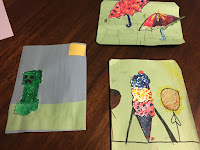
Lesson and Activity: Pointillism

Pointillism

Pointillism is a style of painting that was used primarily between 1880-1900. It involves painting with a bunch of tiny little points of paint. A few things motivated pointillism. First, most paintings of this time were of landscapes and people enjoying life outside. This style was called “Impressionism” and developed as a result of cameras. Before this time, painters would focus on a person seated or standing inside of a room, the background would not be important. With Impressionist artwork, the background was just as important as the people captured in the painting. In fact, in many cases, the background was more important than the people in the painting. In addition, because paints were more portable, artists would work outdoors in the air, and would think about lighting and how to create more realistic artwork. This was an exciting new time, as the concepts of photography merged with paint.

Pointillism arose from this genre of artwork. It is actually scientific. The color wheel (aka ROYGBIV) was developed around this time. The concept was to create an OPTICAL ILLUSION – essentially tricking your eyes to see different colors by putting small dots of unmixed paint near each other. For example, instead of mixing purple paint, a pointillist artist would put dots red and blue close together. Very close up, you would be able to see the dots of red and blue, however standing back, you would only see purple.

This concept of dots making an image is the same as the pixel that is used in our TV’s and computer screens. The more pixels there are per inch, or the more closely packed the pixels are, the clearer the image will be. Digital cameras also use pixels to pick up light. The more pixels there are, the clearer the pictures the camera can take.

Let’s look at a very famous pointillism painting by French painter Georges Seurat, called Sunday Afternoon on the Island of Le Grande Jatte. It took him 2 years to paint this huge painting with little dots of paint. The painting is 10 feet wide by 6 feet tall. If you look closely at the picture, you will be able to find the monkey.


-T.E.A. 2018, TorahHomeschoolFamily.blogspot.com


Activity: Now you can try pointillism art!

Materials:

-Paint – Dollar Tree Poster Paint works
-QTips (Again, you can find these easily at Dollar Tree)
-Card stock
-Construction Paper
-Scissors
-Glue

  1. Find coloring pages that interest your children and print on Cardstock paper. I have four examples here. **Make sure the coloring figures aren’t too large, because it will take longer to color the figure in with dots.
  2. Put small amounts of each color paint in a paint well or on a paper plate.
  3. Give the children qtips and tell them to paint the figures with dots.
    •  Older children can use the Optical Illusion concept and try putting primary color dots near each other to make blended colors. For example, ROYGBIV – Put red and yellow dots near each other to make Orange.
    • Younger children can mix their colors on their plates using ROYBIV, or be given already mixed colors.
    •  Even younger children (2+) can just use the qtips to smear the paint all over their figures, and forget about making points. It’s FUN!
  4.  Allow the figures to dry.
  5.  Cut out the figures and use the construction paper to make a background scene. Then glue the figure to the scene.


Pictures we used:

Minecraft Creeper: http://www.supercoloring.com/coloring-pages/creeper?version=print

Umbrella: http://coloringhub.com/wp-content/uploads/2013/11/Umbrella-coloring-pages-11.jpg

Butterfly: http://www.raisingourkids.com/coloring-pages/animal/butterfly/005-butterfly-to-print-color.html

Car: http://sweetclipart.com/multisite/sweetclipart/files/toy_car_cute_coloring_page.png

Ice Cream Cone: http://www.getcoloringpages.com/coloring/21605


Thursday, February 1, 2018

Help! My Child Doesn’t Want to be Withdrawn from School!

Change can be scary. The decision to take your children out of school is a scary one and is not taken lightly. You don’t know what to expect! You are concerned about the process. You are concerned about how it will affect your children’s lives both educationally and socially. You are concerned about the results! And, often children feel a sense of anxiety too... especially if they are old enough to  actually be aware of the coming changes.

Some children will be against being withdrawn from brick and mortar school and being homeschooled. For them, school education is all they know. The may not want to leave their friends and teachers (similar to a move to another school district), they may have fears like not being able to go to college, or they may be afraid of becoming “weird kids” - those who differ from their peers. Especially for teens, there is something to be said about the freedom that comes with school.  They may be so used to their lifestyles that the thought of being home for more hours of the day, around their parents and siblings, may sound just plan scary!

Then, there is the child who has been withdrawn, but asks to go back to school. Again, the social interactions and freedoms may be missed, but the child may also miss the structure and organization of brick and mortar schooling. They may miss a certain class, or a teacher’s style,.. they may miss gym class or art class.

It is important to recognize that NONE of these things they miss or are afraid of missing is wrong in and of themselves. They are just not in alignment with the decision to homeschool.

Everyone’s circumstances are different. And, homeschool isn’t for every parent and every child. Some children do better in a more institutional setting. Some parents find that they aren’t able to teach their child, or they aren’t able to take the burden of their children’s education because of work or other obligations. I believe that the opinions of our children are important, and that we as parents should always listen to our children and work to understand where they are coming from. This is for the sake of the mental and emotional well being of our children...

However, at the same time, parents must realize that they are raising their children, and are not their children’s friends. Children are not yet experts in life, and they need steering to bring them up in this world filled with thorns and darkness. Similar to the decision to move to another school district, the children may feel a concern about the change, however that will not be THE determining factor on whether or not the family will move. In the same way, a child’s opposition to being withdrawn from school should not be THE determining factor in whether or not to withdraw them and homeschool.

If you decide to homeschool and your child is not on board with the decision or lifestyle change, examine WHY you want to homeschool. If you have an ethical or moral reason that can’t be changed, then I suggest you  gently explain to him or her WHY you are making this change in their life. Explain why this is something that you are compelled to do, and that if they follow your lead in this, then they will be blessed.

Some parent-child relationships are more cooperative - it’s a democracy. This may be the case for the high school senior who is about to enter into the real world. I think wisdom needs to be used for these type of relationships. If you as the parent truly believe the child needs to be withdrawn from school, then you need to make the decision that aligns with that conviction. It may be beneficial for them to meet homeschooled children, go to an event with homeschool children, or making the transition to homeschool a fun and creative one.

Homeschooling is like every decision we make for our children. We do things that we think will help them become the people we are raising them to be. Change in life is inevitable. For some children, the change to homeschooling will be the first major change in their lives. It may be a valuable lesson that they remember for the rest of their lives.

T.E.A. 2018

But I don’t have a teaching degree...


When my family first decided to take our children out of school, our first thought wasn’t the common “what about socialization?,” our first thought was more so along the lines of knowing HOW will we teach our kids.

When I was in college, I had many frustrating classes taught by professors and post docs who were BRILLIANT in their fields of research, but were absolutely LOUSY at conveying basic information to other people. I remember asking on of my physics professor to explain something to me, and he stuttered his way through an explanation until he was red in the face. Then he asked if I understood, and I said yes just for the sake of giving him a break. He wasn’t trying to not be helpful to me, but he couldn’t formulate the information that he could understand perfectly in a way to educate me.

I am sure that there is a benefit to learning the theory behind education. There is a benefit to learning how different learners think. There is a benefit to spending time and energy not only knowing your field of study, but also how to convey that information to another individual effectively.

So, when people come to me and say they would homeschool, however they don’t have a teaching degree, I am very understanding of this concern.  If your children can’t learn from you, then this is a very serious problem. It may prevent you from being able to homeschool your children on your own. But there are ways around it.

I spoke with two other mothers today about teaching our children to read. One thing we found in common was that our children reached a maturity to read on their own around the age 8. Another thing we found in common was that it took some trial and error, different curriculum to get them to the point that they could read.

Here are some suggestions for parents who are thinking about homeschooling, and have this concern:

1. You must be resourceful. Some parents are able to afford private tutors to teach subjects that they don’t understand. Or they get other family members to do it. However, in the age of technology, there are online classes for nearly every subject for free or paid, and also cyber schools. In addition, there are paid subscription programs and local opportunities at science centers and even universities that help teach homeschooled students a variety of topics.

2. Learn how your children think. Spend time to analyze how they learn, and evaluate them to figure out if they are learning and retaining the material that you are teaching them. If they aren’t learning, change your approach or learning materials.

3. Find curriculum that meets your needs. Don’t dive into a curriculum and keep it just because you bought it. If it doesn’t work, change it. Learn how to go with the flow.

A lot of my teaching friends find that being a teacher gets in the way of their ability to flow with educating their children. School can be vastly different from homeschooling. Sometimes a fresh slate, so to speak, is good when educating your children at home.

Our family views education as simply raising our children. We don’t need a degree to know what’s best for our children. The daily educating of our children includes training them in righteousness/Torah, teaching them how to be people of a good character, and teaching them how to read, write, and excel in every area of life.

-T.E.A. 2018

Help! How do I Balance Life and Homeschool?

Honestly, I don’t know how to balance life in general. LOL! So, maybe I’m not the best person to write on this subject. At this moment, I have a mountain of clean laundry to fold, and dinner to warm up... and I’m writing this blog instead of tending to those tasks, but... ahem...


Balance!


This is something that we all need to find in life. How do we manage all the roles that we have... mothers, wives, sisters, friends, employees, students, etc. When I was a working mom, I had to balance raising children with a 10 hour chunk of my weekdays missing. I eventually found a balance - start work at 7, get off at 3:15... pick kids up from daycare or off the school bus, cook dinner, homework time, clean up, bath time, etc. Being a stay at home mom with two older kids and two young babies has led me to find another system that works for my day. It’s a trial and error process, and it evolves over time, but eventually, if we keep striving for it, we find balance.

New homeschool parents typically run their “school days” or times in a fashion like the institutional education they were brought up in. 5-8 hours of school, start early in the morning, etc. It takes a lot of effort to do things this way if you have younger children to take care of. I encourage parents to customize their education styles, hours, and days to what works best for their households.

For example, we do work on Sundays so that my husband can watch our babies while I work with the older children on tasks that I need to focus on. There have been times also when we work in the evenings when my husband is home from work because I need him to watch the younger children. We also are very flexible in the number of hours we do each day. Some days, we work 2-3 hours, while other days we work 5 hours, and some days we just focus on one subject for however long it takes. If my child seems to not be able to concentrate very well one day, I may even let him or her go and do some constructive activity that still stimulates their imagination without having to make them focus on fine levels of detailed learning.

We also start at hours that work for us. Some parents have school days that start at 7am. We, however, typically begin between 9am and 10am...

Balancing life can include bringing your children shopping. Have them help make grocery lists, and budget. It can include them learning how to wash and fold clothes, or how to clean. Doing chores can be a part of their education. Include them in each step of the day. Or find quiet activities they can do while you are busy with day to day duties.

Don’t put yourself in a box. Don’t make goals and schedules and start times that you cannot keep! Evaluate on a consistent basis what you are doing and the success that you are having. If it doesn’t work, don’t hesitate to make tweaks.

Most importantly: Pray for wisdom from YHWH on how to order your life. He is the creator of time. He can show you how to maximize it.


T.E.A. 2018